Boogie Nights
By the end of 1997, the once-surging independent film movement reached a moment of quiet reckoning. Ambitious mid-budget projects continued to garner critical acclaim, while the studio system pursued a decisive pivot toward scalable global franchises. The year captured a fleeting balance between the final wave of director-driven, emotionally grounded storytelling and the first full articulation of priorities that would define the emerging studio era: intellectual property, action spectacle, and broad international resonance. The most enduring films of the year reflect this transitional moment – some embracing genre excess with distinctive flair, others remaining anchored in character-focused narratives shaped by the artistic momentum of the early 1990s.
John Woo’s Face/Off, released in the summer, stands as one of the last major studio efforts to entrust an original action film entirely to an auteur working within the Hollywood system. Structured as a high-concept thriller, the film bears Woo’s unmistakable visual language – balletic violence, operatic sincerity, and emotional boldness. Woo amplified these hallmarks rather than adapting them to commercial convention. His dedication to elaborate cross-cutting, extended slow-motion shootouts, and expressive intensity reaffirmed that stylized action, executed with conviction and vision, could thrive beyond the bounds of franchise conformity.
Curtis Hanson’s L.A. Confidential, adapted from James Ellroy’s intricate novel, offered a more classical vision of studio filmmaking. Set in early-1950s Los Angeles, the narrative follows three policemen as they uncover corruption, pursue ambition, and navigate shifting alliances, embracing the language of noir tradition while introducing modern pacing and narrative complexity. Beneath its period authenticity lies a sustained critique of institutional decay and personal compromise. With restraint and authority, Hanson crafted a literary adaptation that preserved the potential of sophisticated adult storytelling to coexist alongside mainstream cinema spectacle.
In Good Will Hunting, directed by Gus Van Sant and anchored by Matt Damon’s breakout performance, the independent ethos of the decade achieved its most widely embraced expression. A working-class genius confronts psychological trauma and institutional pressure, and his story unfolds through therapy sessions marked by emotional restraint and evolving self-awareness. Robin Williams, in his most grounded and introspective role, brings a quiet gravity that elevates the material with depth and control. The film’s final act privileges small, deliberate choices over dramatic flourish, reinforcing its intimate scale. With nine Academy Award nominations and two wins, it affirmed the continuing appeal of character-driven drama within the commercial theatrical space.
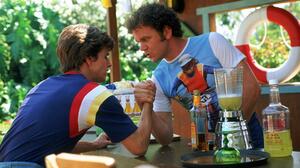
The year’s artistic apex emerged in Boogie Nights, the second feature by the then largely unknown Paul Thomas Anderson. Among 1997’s independent releases, it stood as the most ambitious in scale, scope, and execution. Spanning the rise and fall of Dirk Diggler, a fictional adult film star, Boogie Nights traces the evolution of the San Fernando Valley porn industry across a turbulent decade. Expansive in structure and meticulous in detail, the film constructs a vivid world of found families, aspirational dreams, and eventual collapse. Fluid camera movement, deliberate pacing, and rich ensemble interplay reveal a filmmaker of extraordinary technical fluency, with hypnotic long takes and bravura tracking shots.
The film’s three-minute opening sequence, gliding through a pulsating nightclub in an unbroken shot, announces its stylistic intent. In a single, breathless movement, Anderson introduces his full ensemble, weaving sound, motion, and character into a coherent whole. The sequence captures the giddy energy of the late-’70s porn scene alongside the cinematic possibilities the film itself seeks to channel. More than a flourish of technique, the shot embodies the film’s immersive rhythm and its conviction that the camera, when guided by purpose, can illuminate character, environment, and emotional current in one fluid gesture.
Anderson frames the adult-film set as a space of camaraderie, ambition, and shared creative effort. The visual tone remains warm, the atmosphere buoyant, the lines between work and community fluid yet sustaining. As the 1980s arrive, a colder realism takes hold. Video technology supplants film, boundaries erode, and success hardens into isolation. The story descends into a darker register – addiction, depression, humiliation – without moral condemnation. Anderson maintains a consistent humanist lens throughout, offering each of his characters moments of grace, vulnerability, and reconciliation even as their lives grow more fractured.
The emotional center of Boogie Nights rests in its portrayal of chosen family. These are individuals drawn together through mutual need, cautious trust, and the search for belonging. Anderson renders these bonds with clarity and compassion, capturing their resilience and fragility. Fame introduces tension, success exposes fault lines, and betrayal invites heartbreak. The warmth of the early scenes lingers in memory, even as the group begins to unravel. What remains is a subdued hope – the belief that family can be assembled, splintered, and patiently rebuilt. The camera, like the characters themselves, circles back again, carrying traces of all it has witnessed.
At year’s end, James Cameron’s Titanic redefined the limits of commercial success. With its fusion of visual grandeur, emotional precision, and epic scale, it became the highest-grossing release in history and swept the Academy Awards, including Best Picture, establishing the template for modern mainstream filmmaking – globally attuned, visually spectacular, and carefully engineered for mass appeal. Boogie Nights captured a different inflection point: the culmination a decade-long surge in American independent filmmaking, when deeply personal stories could still command wide theatrical exposure. It depicted a world of risk and provocation, constructed with visual confidence and stamped by the unmistakable presence of guiding authorial hands.
Honorable Mentions: Mike Newell’s Donnie Brasco
And as a footnote, the independent flowering of the 1990s began to recede with the approach of the new century, as studios, seeking predictability, concentrated resources on sequels, digital effects, and proven intellectual property. This fading movement had advanced along a path carved by John Cassavetes, the godfather of modern American independent film, whose work demonstrated that small, intimate stories, crafted outside the system and built around raw, urgent performances, could reshape the medium. His 1974 masterpiece, A Woman Under the Influence, is a vivid landmark of cinematic immediacy and psychological force. Its tremors continue to resonate, a lasting reminder that artistic truth, expressed without compromise, remains cinema’s most enduring revolution.