Robert Zemeckis (1984-1994)
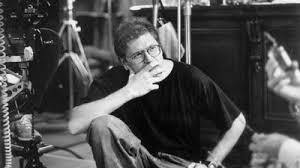
In the crowded landscape of blockbuster cinema, Robert Zemeckis emerged as a figure whose films carried the sheen of popular entertainment while also revealing a restless formal imagination. He understood the pulse of mainstream audiences and shaped his stories around recognizable archetypes and accessible emotions, though beneath this surface he continually experimented with technology, genre, and tone. His career demonstrates how the energy of the era could be guided by a director whose instincts leaned toward spectacle and sentiment, and whose craft never ceased to search for new cinematic possibilities.
Romancing the Stone (1984) Zemeckis’ commercial breakthrough, Romancing the Stone, demonstrated his ability to harness star charisma and genre convention with a vitality that gave new life to familiar material. Following a romance novelist thrust into a perilous Colombian adventure, Zemeckis infused the story with a buoyant rhythm that made its contrivances feel joyous rather than perfunctory. The interplay between Michael Douglas and Kathleen Turner carried an energy that transformed a straightforward treasure-hunt premise into a study of evolving intimacy, while Zemeckis’ staging of action sequences suggested a director who knew how to balance comic exaggeration with genuine peril. The film’s success proved decisive and gave him the latitude to pursue the larger ambitions that would follow.
Back to the Future (1985) The defining statement of his career as well as an essential cornerstone of 1980s cinema, Back to the Future crystallized Zemeckis’ command of narrative propulsion, creating a time-travel story that managed to feel both intricate and effortless. A small-town comedy about adolescence, a science-fiction adventure, and a meditation on generational change are woven together through a screenplay of extraordinary precision. Zemeckis’ camera follows the rhythm of the story with exacting clarity, his use of movement and framing reinforcing the film’s clockwork structure. Michael J. Fox’s performance as Marty McFly embodies youthful anxiety and charm, while Christopher Lloyd’s eccentric Doc Brown provides a counterpoint that grounds the film’s outlandish premise in comic vitality. Beneath the playful surface lies an allegory of self-correction and destiny, presented with such clarity that the mechanics of the narrative become invisible. With its release, Zemeckis reached the height of Hollywood storytelling craftsmanship, and its enduring cultural impact reflects the perfect balance between invention and accessibility.
Who Framed Roger Rabbit (1988) Zemeckis extended his ambitions into territory that seemed impossible, merging live action with animation in Who Framed Roger Rabbit, transforming a technical gamble into a narrative of remarkable richness. Taking place in a 1940s Los Angeles populated by both humans and cartoon characters, the conceit could have collapsed under the weight of its own novelty, however Zemeckis guided the production with a discipline that ensured the technical marvel served the story. Bob Hoskins delivered a performance of surprising gravity, grounding the film in a noir atmosphere even as animated characters swirled around him. Thematically, the film operated as an allegory of industry corruption and creative imagination under siege, its satirical edge cutting deeper than many viewers expected from a family-oriented release. The seamless choreography of camera, performance, and animation revealed Zemeckis’ meticulous attention to craft, and remains a landmark of late-twentieth-century Hollywood innovation and technique.
Death Becomes Her (1992) The early 1990s saw Zemeckis channel his fascination with technology into darker comic territory. Death Becomes Her explored vanity, immortality, and rivalry through the lens of baroque satire, using elaborate visual effects to twist bodies in grotesque and absurd ways. The story of two women who consume a potion granting eternal youth provided Zemeckis an opportunity to combine his taste for spectacle with a sardonic critique of Hollywood’s obsession with beauty and longevity. Meryl Streep and Goldie Hawn embraced the material with theatrical exuberance, while Bruce Willis played against type as a hapless plastic surgeon caught between them. The technical wizardry, particularly the digital manipulation of bodies, pushed the boundaries of what visual effects could accomplish in a mainstream comedy. In the end, the audacity of its grotesquerie carried a fascination that overshadowed narrative coherence, leaving audiences divided even as the industry recognized its pioneering craft.
Forrest Gump (1994) Zemeckis achieved the apex of his mainstream reach with Forrest Gump, creating a cultural phenomenon that embodied both the strengths and the contradictions of his career. The story of a simple man who drifts through the major events of American history was rendered with a mix of technological invention and sentimental earnestness. Through digital compositing, Forrest interacts with presidents and celebrities, a technical feat that dazzled audiences while reinforcing the film’s conceit of history as spectacle. Tom Hanks’ performance provided the film with emotional grounding, his restrained sincerity anchoring a narrative that might otherwise have collapsed into gimmickry. Zemeckis orchestrated the story with a sweep that carried viewers across decades, blending comedy, melodrama, and historical pageant into a single flowing current. While the film’s treatment of history simplifies complexity into anecdote, deriving its emotional power as much from manipulation as from insight, the scale of both its critical and commercial success cemented Zemeckis as one of the central figures of the blockbuster era.
Overall Appraisal Robert Zemeckis established himself as a director who married technical bravura with a keen sense of narrative propulsion. He possessed the ability to turn genre exercises into popular landmarks, to transform technical experiments into seamless entertainment, and to orchestrate performances that remained vivid amid spectacle. His films rarely pursued the kind of psychological depth or moral ambiguity that marked some of his contemporaries, yet his commitment to craft and his instinct for emotional immediacy gave his work a power that resonated with vast audiences. In tracing the arc from the adventurous exuberance of Romancing the Stone to the cultural juggernaut of Forrest Gump, one observes a filmmaker who continually sought to expand the possibilities of mainstream cinema without abandoning its most accessible pleasures. Zemeckis’ legacy during this period lies in his ability to embody the spirit of the blockbuster era, a spirit that fused innovation and sentiment into cinematic events that remain deeply embedded in the cultural memory.