
John Hughes (1984-1987)
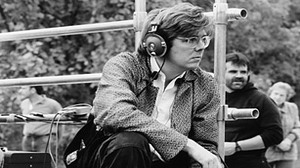
In the mid 1980s, John Hughes emerged as the defining voice of adolescent experience, a filmmaker who captured the rhythms of teenage life with a clarity that resonated across generations. Beginning as a writer before transitioning to directing, Hughes approached storytelling with an ear for dialogue, a sensitivity to character, and an ability to balance broad comedy with moments of vulnerability. Where blockbuster cinema often turned toward spectacle, Hughes found his subject in the hallways of suburban schools, the bedrooms of restless teenagers, and the everyday rituals of family life. His films combined satire with sincerity, exaggeration with empathy, creating works that elevated the teen comedy into a genre capable of emotional depth, reshaped cultural understandings of youth, and remain fixtures of popular entertainment.
Sixteen Candles (1984) Hughes made his directorial debut with Sixteen Candles, immediately displaying his talent for blending comedy with the anxieties of growing up. The story centers on Samantha Baker, played by Molly Ringwald, whose sixteenth birthday is forgotten by her family amid the chaos of her sister’s wedding. Hughes constructed the narrative as comic episodes, from humiliations at school to awkward encounters at a house party, that underlay a portrait of youthful invisibility and longing. Ringwald’s performance carried a naturalism that grounded the film, capturing the mixture of cynicism and hope that defines these years. The film’s mixture of broad comedy and underlying empathy established Hughes as a director capable of elevating material beyond formula, creating a voice that spoke directly to the frustrations and fantasies of the teenage experience.
The Breakfast Club (1985) With The Breakfast Club, Hughes delivered his most enduring statement, a chamber piece that distilled his themes into a single day of confinement. The premise – a group of high school students from different cliques serving Saturday detention together – allowed Hughes to explore stereotypes, hierarchies, and vulnerabilities through extended scenes of conversation. Molly Ringwald, Judd Nelson, Emilio Estevez, Anthony Michael Hall, and Ally Sheedy embodied archetypes that slowly fractured as the characters revealed hidden insecurities and desires. Hughes directed with restraint, relying on close-ups and long takes that gave the actors room to explore shifts in intimacy and confrontation, and moving from sharp comedy to genuine emotion without losing momentum. The final shot, a defiant fist raised against the sky, became an iconic assertion of individuality amid conformity. With this film, Hughes achieved a balance of wit and empathy that secured his place as the era’s chronicler of young adults.
Weird Science (1985) The same year, Hughes turned to more overt fantasy with Weird Science, a story of two teenage outcasts who create the perfect woman through a computer experiment. The film leaned heavily into comic absurdity, its premise a parody of both science fiction and wish fulfillment. Kelly LeBrock’s portrayal of the artificially created Lisa balanced seduction with satire, embodying both the fantasy and the fear that such fantasies conceal. Though the film’s humor veered into broad slapstick and surreal exaggeration, Hughes maintained a thread of affection for his protagonists, portraying their awkwardness with sympathy rather than ridicule. Less emotionally grounded than his other works, Weird Science illustrated Hughes’s willingness to experiment with genre and to translate juvenile anxieties into heightened, often chaotic scenarios, emblematic of his instinct for combining caricature with kernels of sincerity.
Ferris Bueller’s Day Off (1986) A cultural phenomenon upon its release, Ferris Bueller’s Day Off elevated teenage rebellion into myth. Matthew Broderick starred as Ferris, a high school senior who fakes illness to spend a day roaming Chicago with his girlfriend and best friend. Staged as a series of vignettes, from parades to art museums, the film constructed a fantasy of freedom that contrasted sharply with the anxieties of looming maturity. Broderick’s direct address to the camera broke the fourth wall, giving the film a conspiratorial intimacy that made Ferris feel like both character and narrator. Exuberant comedy coexisted with moments of reflection, particularly in the subplot of Ferris’s best friend Cameron, whose fears of paternal authority lent the narrative an unexpected poignancy. Hughes captured the film as a fleeting moment of liberation, an enduring idealization of youth.
Planes, Trains and Automobiles (1987) Hughes expanded into adulthood with Planes, Trains and Automobiles, a comedy about two mismatched men struggling to reach Chicago in time for Thanksgiving. Steve Martin played a high-strung advertising executive, while John Candy portrayed an overbearing yet warmhearted shower curtain ring salesman. The film followed their misadventures across airports, motels, and highways, its humor emerging from the clash of temperaments and the escalation of misfortune. Hughes directed with precision, orchestrating comic set pieces while grounding the story in character. The film’s emotional resonance grew from Candy’s performance, which revealed loneliness beneath bluster, and from Hughes’s decision to end the film on a note of tenderness rather than satire. Redirecting the focus from his earlier works, the film demonstrated Hughes’s ability to translate his strengths – empathy, humor, timing – into broader contexts, proving him a filmmaker not confined to the high school milieu.
Overall Appraisal John Hughes’s directorial career, though brief, reshaped the landscape of American cinema by bringing adolescence into sharp, empathetic focus. Combining the rhythms of comedy with the textures of lived experience, he created authentic characters whose insecurities and aspirations felt real, even when framed by exaggeration or fantasy. His unique ability to blend humor with vulnerability, and distill his themes into concentrated explorations of identity, allowed him to push the boundaries of comedy without sacrificing empathy. His films from this period succeed because he insisted that popular cinema treat the emotional lives of teenagers with seriousness as well as humor, reflecting both the comedy and the fragility of growing up. Ultimately, Hughes’s legacy rests in the bridge he built between satire and compassion, laughter and recognition, with stories that remain as vital to audiences today as they were to those who first encountered them in the 1980s, proving that even in the most exaggerated circumstances, the truth of our emotional lives can shine through.