
Terry Gilliam (1981-1995)
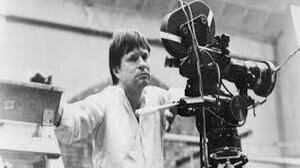
Among the directors who emerged from the blockbuster era, Terry Gilliam occupies a singular position, a filmmaker whose visual imagination produced a sequence of films that remain among the most distinctive of their time. Having begun as an animator and member of Monty Python, Gilliam carried into his features a surrealist sensibility, a fascination with labyrinthine spaces, and a distrust of authority that manifested in narratives where dream collided with bureaucracy. His films reveal both the heights of his creativity and the challenges of reconciling visionary ambition with the demands of commercial cinema, resulting in a body of work between fantasy and satire, humor and despair, offering audiences a glimpse into worlds at once grotesque, beautiful, and unnervingly close to our own.
Time Bandits (1981) Gilliam’s breakthrough as a director came with Time Bandits, a fantasy adventure that combined the anarchic spirit of Monty Python with a child’s-eye view of history and myth. The film follows Kevin, an English boy who joins a band of dwarves on a journey through time, encountering Napoleon, Robin Hood, and Agamemnon before confronting the embodiment of Evil itself. Gilliam directed with manic energy, his sets filled with cluttered detail and skewed perspectives that suggested a universe both whimsical and threatening. The film refused to sentimentalize childhood; Kevin’s adventures are exhilaratingly tinged with menace, and the ending’s dark twist underscored Gilliam’s willingness to subvert expectations. With its mixture of slapstick, satire, and philosophical undercurrents, Time Bandits announced Gilliam as a director capable of turning fantasy into allegory, a storyteller unafraid to blend humor with darkness.
Brazil (1985) With Brazil, Gilliam delivered the film that defined his reputation, a dystopian satire that fused Kafkaesque bureaucracy with visual extravagance. The story of Sam Lowry, a low-level clerk who dreams of escape through fantastical visions of flight, became Gilliam’s meditation on the absurdities of modern life and the crushing weight of systems that obliterate individuality. The production design filled every corner of the screen with pipes, ducts, and machinery, creating a world both futuristic and archaic, while the dream sequences expanded into operatic visions of angels and monsters. Gilliam’s editing balanced frenetic comedy with moments of lyrical beauty, giving the film a rhythm that mirrored the instability of its world. Though the troubled release of Brazil, marked by battles with Universal over its ending, became as legendary as the film itself, the final product endures as one of the great achievements of the era, demonstrating Gilliam’s ability to combine satire, fantasy, and tragedy into a single vision that unsettled as it dazzled.
The Adventures of Baron Munchausen (1988) Gilliam pursued even greater ambition with The Adventures of Baron Munchausen, a film that pushed the limits of production design and spectacle. Recounting the tall tales of the aging Baron as he recounts his fantastical exploits, Gilliam’s extravagant visual invention filled the screen with improbable creatures, impossible landscapes, and elaborate set pieces that conveyed the boundless power of imagination. In the end, the film’s chaotic production – budget overruns, logistical challenges, and studio skepticism – left it vulnerable to criticism and financial failure. Yet within its excess lies some of Gilliam’s most breathtaking imagery, from lunar adventures to encounters with the god Vulcan, rendered with a painterly attention to light and detail. The film stands as both triumph and cautionary tale: a heartfelt testament to Gilliam’s refusal to temper his imagination, and a reminder of the risks inherent in the pursuit of cinematic spectacle.
The Fisher King (1991) Shifting toward contemporary drama while retaining his fascination with myth and redemption, The Fisher King followed a disgraced radio host, played by Jeff Bridges, and a homeless man haunted by trauma, portrayed by Robin Williams, whose quest for healing became entwined with Arthurian legend. Gilliam balanced gritty depictions of New York life with flights of fantasy, most memorably a sequence in Grand Central Terminal where commuters erupt into a ballroom dance. The performances anchored the film’s eccentricity, with Williams’s manic energy counterbalanced by Bridges’s weary restraint. Gilliam’s direction found poignancy in the interplay between harsh urban reality and moments of transcendence, suggesting that imagination could serve as both refuge and salvation. The film earned critical acclaim and Academy recognition, proving that Gilliam’s sensibility could be harnessed to a more character-driven narrative without losing its vitality.
Twelve Monkeys (1995) Gilliam’s most commercially successful film, Twelve Monkeys, combined dystopian science fiction with psychological ambiguity. The narrative followed a convict, played by Bruce Willis, sent back in time to prevent a viral apocalypse, only to find himself entangled in questions of memory, delusion, and inevitability. Gilliam’s visual style transformed Philadelphia and Baltimore into decayed, industrial landscapes, his camera often tilted or distorted to convey disorientation. Madeleine Stowe delivered a performance of warmth and intelligence, grounding the film’s darker currents, while Brad Pitt’s frenetic turn as an institutionalized activist added manic volatility. The film balanced Gilliam’s flair for grotesque detail with a taut narrative structure, creating a work that satisfied audiences while preserving his idiosyncratic touch. Twelve Monkeys remains his most accessible achievement, a film where his penchant for chaos and satire merged with the demands of genre storytelling to powerful effect.
Overall Appraisal A truly distinctive voice of the blockbuster era, Terry Gilliam consistently exceeded the boundaries of convention. His works reveal a commitment to visual invention, to stories where fantasy and satire expose the absurdities of modern life, and to characters who struggle to reconcile dreams with oppressive realities. His ability to blend childlike wonder and emotional resonance with nightmarish menace and bureaucratic dystopia displayed both the brilliance and peril of unrestrained imagination. Proving that his eccentric style could align with commercial success, he would continue to insist that cinema remain a medium of imagination unbound, a place where the grotesque and the sublime coexist, and where the act of dreaming becomes an act of defiance. His films embody both the risks and the rewards of visionary filmmaking, ensuring his legacy as one of the most daring directors of his generation.