Brokeback Mountain
In 2005, several films settled inside lives already shaped by social expectation and personal responsibility, following characters whose days were governed by conditions that had solidified over years. A small group left the deepest impressions. Zhang Yimou’s Hero, released domestically the previous summer, traced duty across generations and political myth; David Cronenberg’s A History of Violence revealed inherited moral consequence and disrupted domestic order; and George Clooney’s Good Night and Good Luck observed journalists working under institutional pressure where conviction carried consequence. Each remained attentive to how people move forward once the outlines of their lives have already been drawn.
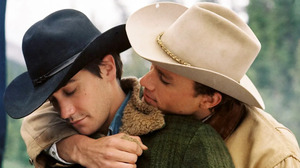
At the center of that attention stands Brokeback Mountain, a film that remains singular in its patience and clarity, staying with two lives across decades as they move inside work, geography, and social codes that exert constant pressure. Directed by Ang Lee with a firmness that refuses exaggeration, the film begins in Wyoming in the early 1960s, where Ennis Del Mar and Jack Twist meet as young men hired to tend sheep on a remote mountain for the summer. Their labor is repetitive and solitary, defined by long hours and enforced proximity, shaping their relationship through routine and shared necessity.
The mountain is presented as a working landscape that creates conditions for intimacy through isolation and endurance. Days pass with little variation as the men herd sheep, prepare meals, and settle into the rhythms of labor, permitting time to establish itself as the organizing force. Their intimacy emerges gradually, first through shared glances and small gestures, then through a single night that alters the course of both lives. Lee frames this moment to arrive as an accumulation of proximity, and the aftermath is defined by adjustment, as the men return to work the next morning under conditions now charged with unspoken knowledge.
When the summer ends, the film treats their separation as inevitability, with both men returning to lives shaped by expectation and economic necessity. Ennis marries Alma, begins work in construction and ranch labor, and settles into a domestic rhythm marked by financial strain, emotional reserve, and paternal responsibility. Jack marries Lureen, enters her family’s business, and adopts the surface of ambition and mobility, while remaining similarly bound by social performance and constraint. Lee observes these lives through years of incremental change, letting marriages, children, and employment gather momentum as the memory of the mountain is carried forward privately and without articulation.
The film unfolds across a series of reunions spanning two decades, each shaped by altered circumstances and narrowing possibility. When Ennis and Jack meet again years later, their connection resumes with urgency and familiarity, now shaped by distance, secrecy, and the demands of adult life. Their time together occurs in brief intervals carved out between responsibilities, often framed as fishing trips or temporary escapes that preserve proximity while maintaining plausible cover. Lee films these moments with restraint, with the passage of time registering through aging faces, altered posture, and the accumulated effects of compromise visible in each man’s bearing.
Brokeback Mountain stays with forms of constraint that unfold quietly across daily life, shaping decision and behavior long before they announce themselves as danger. Ennis’s fear is anchored in memory and lived experience, shaped by childhood exposure to violent enforcement of social boundaries that continues to govern his adult choices. Jack’s frustration emerges through movement and aspiration, through efforts to imagine a life that might extend beyond routine, though each possibility narrows when set against economic reality and consequence. Lee lets both responses exist on their own terms, observing how temperament and experience shape endurance in different forms.
The film’s middle passages carry particular force through their plain depiction of domestic strain, as marriages fray, children grow older, and the emotional cost of secrecy becomes increasingly visible. Alma’s awareness of Ennis’s attachment to Jack is conveyed through small details and moments of observation, with that knowledge residing inside the marriage as a quiet presence that alters its texture. Lureen’s relationship to Jack remains defined by surface compatibility and shared enterprise, while his internal restlessness persists unresolved. Lee declines to impose hierarchy on these relationships, allowing each to exist as a lived arrangement shaped by context, affection, and limitation.
As years pass, the film’s tone shifts toward fatigue, as opportunities contract and physical distance becomes more difficult to bridge. Ennis’s work grows less stable, Jack’s efforts to imagine alternate futures remain unrealized, and the intervals between their meetings lengthen. When Jack proposes the possibility of building a shared life, the suggestion is framed as labor involving land, work, and daily coexistence, while Ennis’s refusal is grounded in fear shaped by history and observation. The scene is staged with restraint, giving both positions the chance to register with full weight, each articulated through a vision shaped by survival alongside desire.
The film refuses resolution or catharsis. Jack’s death arrives indirectly, conveyed through conflicting accounts that mirror the uncertainty and distance that defined his life with Ennis. Lee brings its violent implications into focus through Ennis’s response, as grief settles into recognition rather than shock. When Ennis visits Jack’s childhood home and encounters the remnants of their shared past, the discovery of their shirts stored together functions as physical evidence of a life that existed quietly and left traces carried forward in private.
The closing scenes remain among the most precise in American cinema, as Ennis returns to his solitary routine, now altered by memory and loss. The final image of the shirts hanging together inside his trailer suggests continuity rather than transcendence, as he carries forward what he has learned and loved within boundaries that remain in place. Viewed today, Brokeback Mountain endures because it refuses simplification, remaining grounded in the lived realities of its characters as love continues across years shaped by fear, responsibility, and persistence. In staying with Ennis and Jack over decades, the film honors the complexity of endurance, offering one of the clearest and most humane portraits of love lived under constraint in modern American cinema.
Honorable Mentions: Christopher Nolan’s Batman Begins, Stephen Chow’s Kung Fu Hustle, Joe Wright’s Pride and Prejudice