
Ridley Scott (1979-1991)
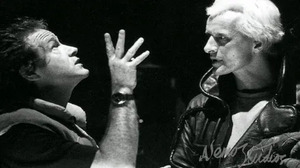
A filmmaker whose fascination with design, texture, and atmosphere distinguished his work from the prevailing rhythms of the time, Ridley Scott brought to feature filmmaking a precision of image and an obsession with world-building that elevated genre stories into fully realized universes. Trained as a commercial director and designer, his films combined meticulous craft with a willingness to stretch the possibilities of visual storytelling, offering audiences experiences that lingered as much for their aesthetic impact as for their narratives. During his rise, Scott became known as a sculptor of environments, a director who could transform speculative fiction, fantasy, and crime thrillers into immersive visual spectacles that redefined the possibilities of cinematic space.
Alien (1979) Scott’s arrival on the international stage came with Alien, a film that reshaped the science-fiction genre into a vehicle of horror and dread. The narrative tracked the crew of the Nostromo as they encountered a lethal extraterrestrial organism, Scott’s direction elevating the material far beyond its pulp origins. Working with designer H. R. Giger, he created a world of unsettling biological machinery, a setting where every corridor seemed to breathe and every shadow carried menace. The pacing was deliberate, the camera lingering on textures of steel, smoke, and darkness, transforming the spaceship into a labyrinth of claustrophobia. The decision to cast Sigourney Weaver as Ripley provided the film with a protagonist whose quiet resilience contrasted with the terror surrounding her, and the final act became a showcase for Scott’s ability to blend suspense with visual poetry. Alien succeeded as both commercial entertainment and as a masterclass in atmosphere, redefining the way science fiction could embody terror.
Blade Runner (1982) Scott expanded his vision with Blade Runner, a film whose initial reception was ambivalent yet whose reputation has grown to towering status. Set in a rain-soaked Los Angeles of the future, the film followed Harrison Ford’s Deckard as he hunted rogue replicants, the narrative often receding behind the power of the imagery. Under the leans of cinematographer Jordan Cronenweth, Scott constructed a city that felt both familiar and alien, its neon glow and perpetual night capturing the anxieties of urban modernity. A visual essay on the collision of technology and humanity, the performances of Rutger Hauer and Sean Young added emotional resonance to a meditation on identity that could have been suffocated by its design. Initially criticized for its pacing and ambiguity, Blade Runner has since been recognized as a vitally essential and influential work of the era, its aesthetic shaping the language of science fiction for decades to come.
Legend (1985) After the dystopian grandeur of Blade Runner, Scott turned to fantasy with Legend, a film conceived as a fairy tale steeped in archetype, presenting a battle between innocence and darkness in a world of enchanted forests and demonic adversaries. Scott’s gift for creating immersive environments was evident in each and every frame: shafts of light pierced through elaborate sets, creatures were rendered with a tactile realism, and the figure of Darkness, played by Tim Curry, became an embodiment of gothic excess. The story itself proved fragile, weighed down by clichés and a tonal imbalance that left audiences uncertain. The film’s box office disappointment underscored the risks of prioritizing design over narrative, though over time it has developed a cult following, admired for the audacity of its imagery and the intensity of its atmosphere. Legend demonstrates Scott’s commitment to world-building, even when story and character faltered.
Black Rain (1989) With Black Rain, Scott shifted into crime thriller territory, combining the conventions of the buddy-cop genre with a fascination for cross-cultural tension. Michael Douglas starred as a New York detective pursuing a Yakuza fugitive in Osaka, and the film’s narrative unfolded as a clash between American bluntness and Japanese restraint. Scott used the city as both setting and character, his camera reveling in neon-lit streets, industrial skylines, and the contrasts of tradition and modernity. The story itself offered few surprises; however, the film’s atmosphere gave it a distinctive energy. The action sequences were staged with precision, and Hans Zimmer’s score deepened the sense of displacement and menace. Although less celebrated than Scott’s science fiction works, Black Rain demonstrated his ability to adapt his visual sensibility to genre convention, creating a thriller that felt expansive in scope while remaining grounded in the intensity of its central performances.
Thelma and Louise (1991) Perhaps the most unexpected triumph of this period came with Thelma and Louise, a road film that became a cultural landmark. Susan Sarandon and Geena Davis played two women whose spontaneous road trip spiraled into violence and liberation, and Scott directed their journey with a balance of grit and lyricism. The desert landscapes became as central as the characters themselves, the vast open spaces symbolizing both freedom and peril. The film’s emotional power derived from its refusal to settle into conventional morality; the women’s choices were portrayed with empathy, their defiance against patriarchal violence given the weight of tragedy and exhilaration. The climactic leap into the canyon became an image of both despair and transcendence, an ending that refused closure and carried an undeniable force. For Scott, it was a film that proved his visual instincts could serve stories grounded in character and social critique, and its reception expanded his reputation beyond genre cinema into broader cultural relevance.
Overall Appraisal Ridley Scott’s work during this period illustrates the range and ambition of a filmmaker committed to the primacy of the image. His films demonstrated that visual design could shape not only atmosphere but meaning, transforming stories into fully realized worlds that lingered in the imagination long after their narratives faded. Alien and Blade Runner redefined the visual grammar of science fiction, Legend revealed both the allure and the pitfalls of aesthetic excess, and Thelma and Louise proved his imagery could channel profound social resonance. Scott’s enduring significance rests in his ability to align commercial filmmaking with an artistry rooted in design and atmosphere, making him one of the era’s most distinctive and influential directors.